
eSIM vs physical SIM: what works best when you arrive in Germany

Travellers and digital nomads often choose eSIMs, while expats settling down in Germany prefer physical SIMs. We compare both options in this article – pick the one that suits you the best.
Physical SIM cards
Travel eSIMs
Local eSIMs
Local eSIM vs physical SIM: What is cheaper
eSIM vs physical SIM: How to choose
Main German network providers
SIM card activation: The hardships
FAQ
Physical SIM cards
A physical SIM card in Germany costs less long-term and provides a +49 number required by landlords and banks, but every prepaid card requires a mandatory ID check before activation, which adds time to your setup.
Pros for expats and travellers
- Local phone number: A physical nano-SIM gives you the +49 prefix, which landlords, banks, and local offices expect when you sign a lease or open an account.
- Cost-effective for long stays: When committing to a 12- or 24-month contract, a large data plan costs much less over time.
- Device compatibility: A physical SIM fits into older phones without a problem.
Cons for expats and travellers:
- The bureaucracy: You have to sit through the slow identity verification required by German law before getting a signal.
- Inconvenience: Finding a telecom shop, fighting the language barrier, and waiting out a slow SIM card activation eats up hours of your first day.
- Losing your home number: If you take out your home card and your phone doesn’t have a dual SIM capability, your home number goes dead. You miss SMS messages from your bank and services back home.
The standard SIM is still everywhere and helps to avoid expensive data roaming, but the process now has trade-offs.
Tips: Best prepaid SIM cards for expats in Germany (no Anmeldung required).
Travel eSIMs
A travel eSIM activates immediately without passport checks because foreign-issued profiles fall outside German SIM registration law. An eSIM (embedded SIM) is a digital chip built directly into your phone's motherboard. You simply buy a foreign travel profile online and download the data plan straight to the chip without dealing with local authorities.
Pros for expats and travellers:
- Instant connectivity: You can buy the plan before you even pack your bags. It activates immediately, so you have a working internet connection before you even walk off the airport.
- Bypassing registration: Since foreign operators issue these profiles, German domestic laws don’t apply to them. This means you skip the SIM registration requirement.
- Dual SIM capability: Your phone runs both your home card and the travel embedded SIM together. You use cheap local data but still catch text messages from back home.
Cons for expats and travellers:
- Data-only limits: Most short-term profiles don’t give you a German phone number, so they only work for internet browsing and apps.
- Hardware limits: Older phones don’t have the right internal chips. You have to check compatibility before buying.
- Setup requirements: You need a quick Wi-Fi connection to download the profile in the first place, though your activation speed on the mobile network is immediate right after.
Local eSIMs
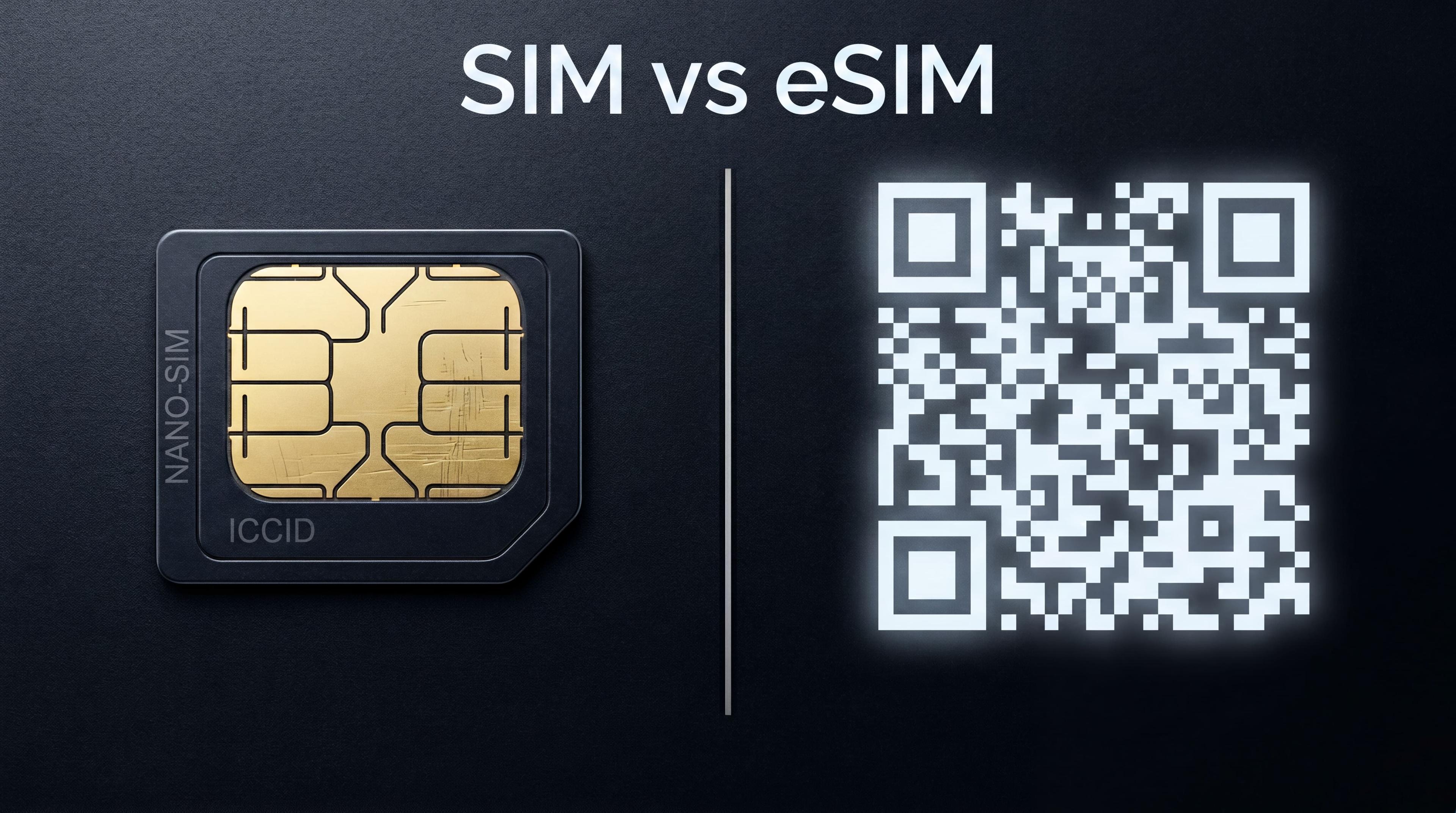
A local German eSIM delivers a +49 number via QR code within hours or faster, requiring only Video-Ident or Post-Ident verification – without shop visits.
Pros for expats and travellers:
- Faster remote setup: You cannot escape the identity verification, but you don’t have to walk to the office or wait for a physical card to arrive.
- Keeping both numbers: Your foreign physical card stays active alongside your new digital one, so you won’t miss important texts from your home country.
- Multiple digital profiles: An embedded SIM can hold several carrier profiles at once. You can switch between work, personal, and regional contracts without ever looking for a paperclip to open your SIM tray.
Cons for expats and travellers
- The bureaucracy remains: Since you are getting a local number from a German provider, the strict identity verification process (Video-Ident or Post-Ident) mandated by the government still applies to you.
- Hardware limits: You have to verify your device compatibility before you pay. If your phone cannot download digital profiles, you need to buy a physical card.
- Wi-Fi needed for setup: You must have an active internet connection to download the local profile in the first place.
Once you get the local number, you can start sending money from Germany quickly and safely. Use your new number to join our service Profee, and get access to simple transfers.
Local eSIM vs physical SIM: What is cheaper
Local eSIMs save 1–30 EUR over physical SIMs, even though the core plans and activation fees cost the same.
When you sign up for a plan directly with Telekom Deutschland (Deutsche Telekom), Vodafone Germany (Vodafone GmbH), or O2 Germany (Telefónica Deutschland), you are paying for the data and minutes – the network doesn’t care whether it arrives on plastic or over the air.
Where the local eSIM saves you money
- Zero shipping costs: Ordering a physical SIM online usually adds a 1-5 EUR postal fee to your bill. Digital profiles show up in your email inbox instantly for free.
- Cheaper replacements: If you lose your phone or snap your plastic card, German networks may charge a 10-30 EUR replacement fee. With a digital profile, you can usually generate a new QR code in your account for free when you change devices or need a replacement profile.
eSIM vs physical SIM: How to choose
A travel eSIM suits stays under 30 days; a local German SIM or eSIM is a must for stays beyond 90 days when you need a +49 number for banking and housing. So, choose based on your stay length and the purpose of the trip.
Tourists and short-term travellers: a travel eSIM is the go-to option. You won’t waste your first morning standing in a phone shop and will have access to the web right after landing.
Digital nomads: a Regional Europe travel eSIM is the sensible choice. Your data stays active when you cross borders, so you never have to register with local authorities or swap plastic cards.
Long-term expats: you will need a local physical SIM or a local German eSIM contract. A tourist profile works while you unpack, but you must pass the identity checks to get a German +49 phone number for flat contracts and banks. The digital route is cheaper because it drops shipping and replacement fees.
Main German network providers
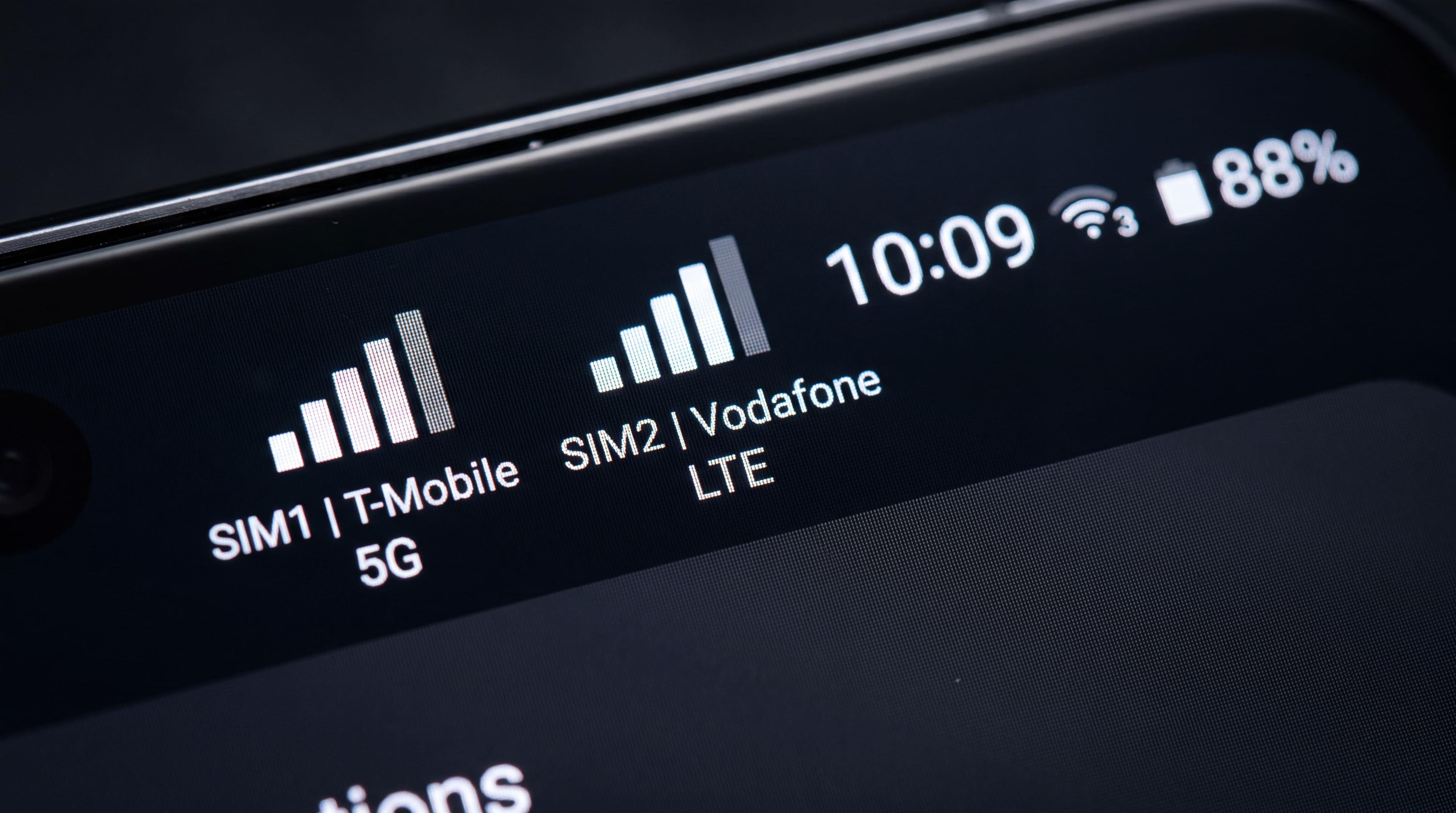
Germany's four main mobile providers are Telekom, Vodafone, O2, and 1&1 – each offers both physical SIM and eSIM plans.
- Telekom Deutschland: They charge more, but you get a stable signal outside the city.
- Vodafone Germany: Good national 5G coverage, fully supporting the EU Roam Like at Home regulation.
- O2 Germany (Telefónica Deutschland): Cheaper and works great in bigger cities like Berlin, though rural coverage drops.
- 1&1: Launched its own network only in 2023, making it the youngest provider in Germany. It works well in dense areas, but in the countryside, 1&1 connects your phone to the Vodafone network.
These companies have products for most needs, whether your phone uses a nano-SIM or an embedded SIM (eSIM). They also have options for international travel and data roaming.
Tip: Thanks to the EU Roam Like at Home regulation (Roaming Regulation 2022/612), you don’t pay extra for data roaming within the European Union if you have a German SIM card.
Read more: Cheapest mobile plans in Germany by usage – compare options and save money on data.
SIM card activation: The hardships
SIM card activation in Germany takes 30 minutes to several hours due to mandatory identity verification. You can’t just buy a card and go online. The Bundesnetzagentur enforces the German SIM card registration requirements (Telekommunikationsgesetz) to track who owns which number. This requirement slows down your activation speed. Identity verification usually happens in one of three ways:
- In-store checks: You buy a physical SIM and stand at a counter while staff type your passport details.
- Video calls: You hold your passport to the camera. You need stable Wi-Fi, and the agent might only speak German.
- Post office visits: You take printed papers to a post office, which may be a long and unnecessary trip.
Frequently asked questions about eSIMs and physical SIMs in Germany
Does Germany use eSIM or a physical SIM?
Both options are available.
Can a foreigner buy a SIM card in Germany?
Yes, you can buy SIM cards without a German ID. A valid passport is enough.
Should I turn off roaming if I have an eSIM?
You must turn the roaming off on your home line, but keep it on on the eSIM.
Can I go back to my physical SIM after eSIM?
Yes, it’s easily converted.
Can you still get text messages if you remove your SIM card?
No, you must have a physical SIM/eSIM card to receive SMSs and calls.