Best prepaid SIM cards for expats in Germany (no Anmeldung required)

Moving to Germany involves plenty of paperwork, but getting a mobile connection shouldn't be your biggest headache. Yet there’s a common myth that you need a residence permit or an Anmeldung (registration certificate) just to get a SIM card in Germany. In reality, you can get connected the day you land. This guide covers the best budget-friendly prepaid plans and high-data prepaid plans that work with just your passport verification.
Why Anmeldung is not required for SIM activation
Best prepaid SIM card options
How to get a SIM card in Germany: Step-by-step
Useful tips for 2026
Why you don't need an Anmeldung for SIM activation
While the Anmeldung is a must-have for everything from German bank accounts to long-term gym memberships, you do not need it for a prepaid SIM karte in Germany. Under §111 of the TKG, providers have to know who you are, but they don't legally require you to have a permanent home yet.
Whether you pick Telekom prepaid, Vodafone prepaid, or an O2 prepaid plan, you can verify your identity in a brand shop, via VideoIdent or at a post office (PostIdent). For the address, your Airbnb or hotel details are usually enough to get the process moving.
Pro tip: If you choose VideoIdent, find a spot with good light. The agent will ask you to tilt your passport to check the 3D holograms – it feels a bit like a formal interview, but it’s just a standard security check required by the Bundesnetzagentur. If Videoldent doesn’t work (which often happens with foreign passports) visit the company’s shop or a post office.
Before scanning your passport, make sure the app and seller are legit. Never share sensitive information with shady companies to avoid scam.
Best prepaid SIM card options
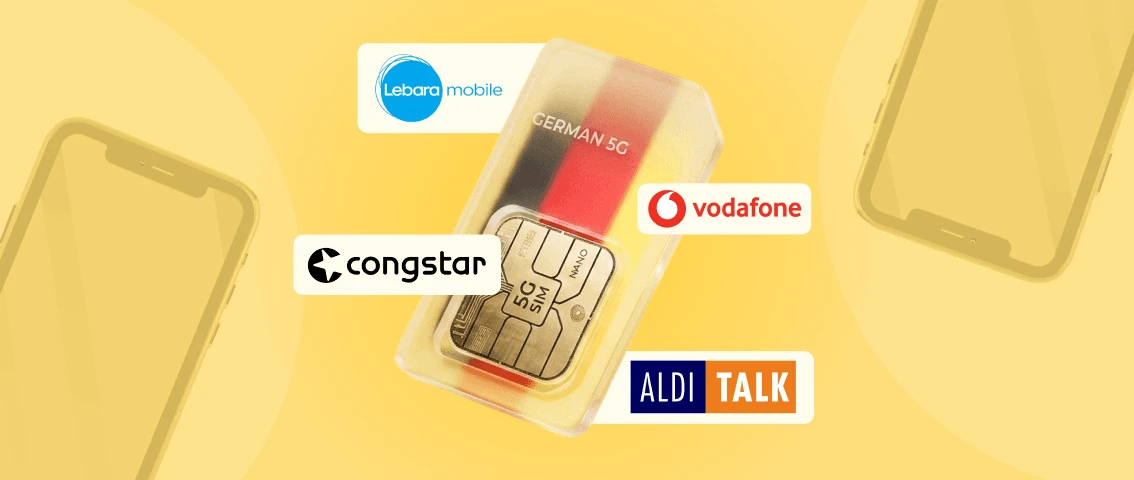
Congstar (Telekom D-network)
Congstar prepaid is the go-to for many expats. It’s a subsidiary of Telekom, which means you get the D-network – essentially the gold standard for signal strength in rural areas or on trains.
- Pricing: €10.00 per 4 weeks for 25GB (as of April 2026).
- eSIM: You can get this immediately during your SIM purchase.
- The upside: The app is easy to navigate, and they offer support in English in some shops and the Support Forum.
Vodafone CallYa (D-network & High speed)
If you need fast 5G, Vodafone prepaid (CallYa) is the main rival to Telekom. It’s particularly reliable in cities.
- Pricing: €9.99 for 25GB (as of April 2026).
- Roaming: Vodafone follows the EU Roaming regulation strictly – your data package works in Paris or Rome just like it does in Berlin.
- The upside: You can set everything up quickly through the MeinVodafone App, even if you’re just using a temporary phone number for a few weeks.
O2 prepaid (Telefónica O-network)
The O-network used to have a reputation for being inconsistent, but in 2026, it is excellent in almost every German city.
- Pricing: €9.99 for 20GB or "Unlimited on Demand" if you’re a heavy streamer.
- The upside: It’s a solid choice if you don’t want a long contract but need a high-data prepaid plan.
Aldi Talk (The budget king)
Aldi Talk has one of the cheapest prepaid SIM cards. You can grab a starter kit at any Aldi checkout while buying your groceries.
- Pricing: €9.99 for 25GB on their standard combo (as of April 2026).
- SIM activation: You’ll need to use the ALDI TALK Registrierungs app for passport verification.
- The upside: It’s easy to switch to an eSIM within the app.
Lebara & Ortel mobile (International focus)
Lebara Germany and Ortel Mobile Germany are built for people who need to call home outside the EU.
- Pricing: Lebara – €4.99 for 20GB. Ortel – €12.49 for 20GB. Good pay-as-you-go SIMs for international minutes (as of April 2026).
- Network: Lebara currently runs on the O2 network.
- The upside: They offer passport-only SIM activation and land support in multiple languages, like Arabic, Polish, and English.
More about local prices: Cost of living in Germany in 2026, full breakdown.

How to get a SIM card in Germany: Step-by-step
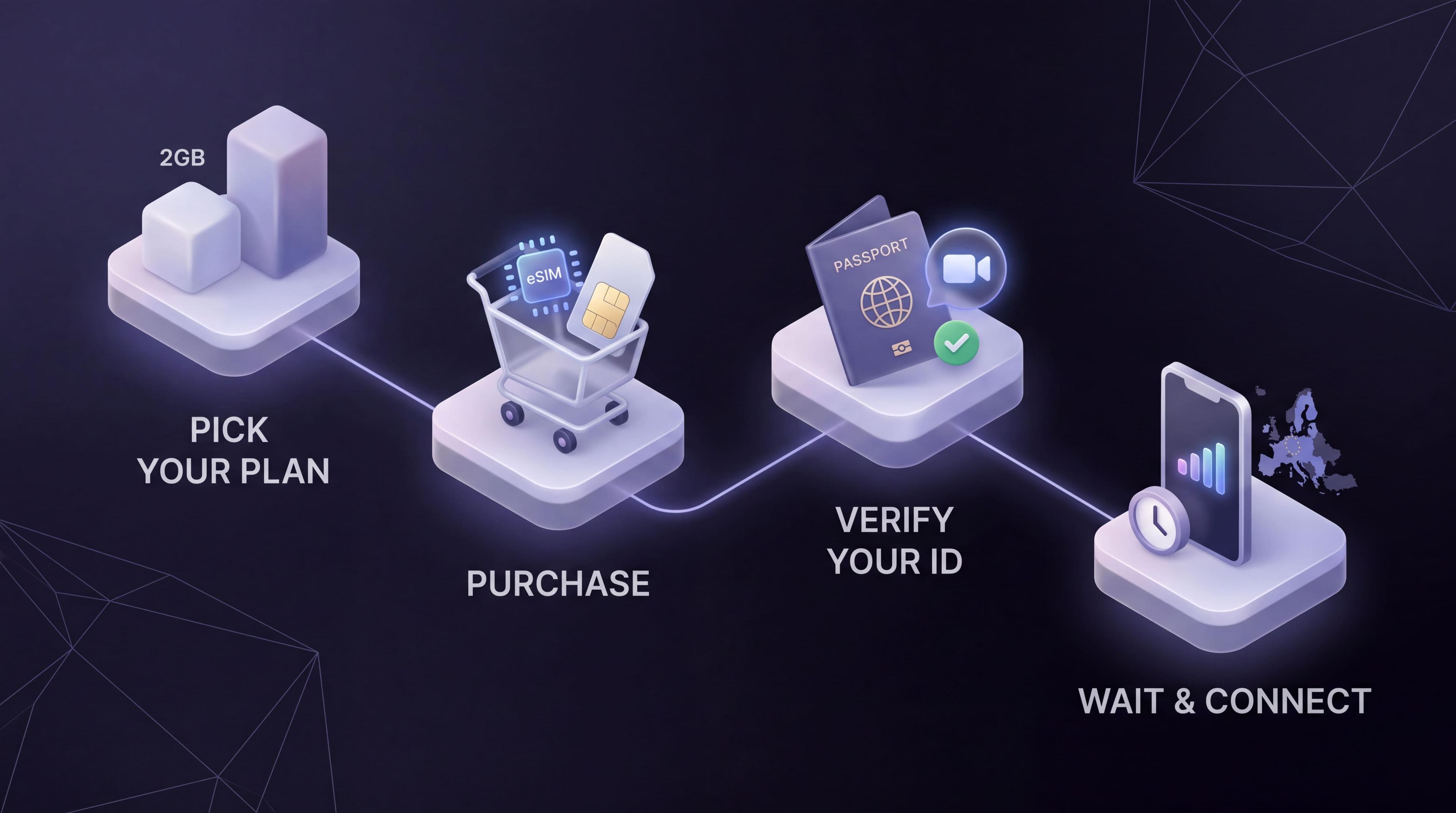
- Pick your plan: Choose based on your actual usage – typically, you’ll see a data allowance like 5GB for €10.00 or 20GB for €15.00. When you just arrive, buy more data than usual to feel confident in a new country.
- Purchase: Buy an eSIM via online SIM purchase for instant access, or pick up a physical kit at a supermarket or provider shop.
- Verify your ID: Open the provider’s app. You’ll need your passport and a few minutes for a video call to complete SIM activation. If the online option is not available, visit a physical branch.
- Wait for the signal: This usually takes about 30 minutes, though it can take up to 2 hours during busy times.
- Start using data: Once it’s live, your data package is ready. Because of the EU Roaming Regulation, you can head across the border to France or Italy immediately without paying extra roaming fees.
Make sure your phone is "unlocked." If you brought a device from home that is tied to a specific carrier, a German prepaid SIM karte simply won't work. An "unlocked" phone means it is free to accept a signal from any carrier worldwide. If you are unsure, contact your original provider to request an "unlock code" before you travel.
For expats: Which German cities offer the best balance of job opportunities and living costs.
Useful tips for 2026
- Public Wi-Fi: While "WIFI@DB" on trains has improved, it is still hit-or-miss. Having a high-data prepaid plan is much more reliable for finding your way around.
- Auto-top up: You can usually link a card to renew your plan. If you’re only using a temporary phone number, remember to turn this off before you leave the country.
- Emergency calls: You can always dial 112 in Germany. Even if you haven't topped up your balance, the call will go through as long as your SIM activation is finished.
- Dual SIM strategy: If your phone supports it, keep your home SIM as an eSIM for receiving 2FA texts or using WhatsApp and switch to your German SIM card for all local data. Just ensure your home provider has "Data Roaming" turned OFF to avoid massive bills.
- Master the bonuses: Most providers in 2026 offer free data "gifts". Keep an eye on notifications, explore the apps and spot sweet deals to catch gifts.
Do you need an Anmeldung for a prepaid SIM card?
No. You don’t need the official residence registration paper to get a SIM card. Providers are good with just a valid passport or an EU ID card. When they ask for an address during sign-up, a temporary one – like your hotel or an Airbnb – is enough to get the line active.
Can tourists get a prepaid SIM card in Germany?
Yes, they are easy to find in supermarkets like Aldi or Lidl, at airports, or in mobile shops.
Can I buy a SIM card before I travel to Germany?
You can, but eSIM is a more convenient option. Services like Airalo or digital plans from Vodafone let you set everything up before you leave the country. If you want a physical card, you’ll likely have to wait until you arrive, as most local German providers only ship to addresses within the country.
What documents do you need to buy a SIM card?
Just a valid passport or an EU National ID card, and proof of address, just in case. If you aren’t from the EU, make sure you have your actual physical passport on hand. A German residence permit (Aufenthaltstitel) works perfectly too.
Is eSIM better than a prepaid SIM for newcomers?
eSIM is definitely the fastest way to get online the moment you land.