Residence permit in Germany: Aufenthaltstitel types, requirements and application process

If you’re moving to Germany from outside of the EU, you’ll need a resident permit (Aufenthaltstitel) to stay in the country legally. Usually, it takes four to ten weeks to get and costs around 100-150 EUR. This article breaks down the different types of permits, core expectations, and provides a complete step-by-step guide to making Germany your home, without leaving out any crucial details.
Aufenthaltstitel explained
Types of temporary residence permits
Permanent residence permits
Three pillars of a successful application
Application process inside Germany
Extensions, job changes, and travel rules
FAQ - German residence permit
Aufenthaltstitel explained
An Aufenthaltstitel is the official term for any residence permit or stay authorisation that grants a third-country national the legal right to live, work, or study in Germany.
Under German immigration law, Aufenthaltstitel isn’t the same as a national visa. The latter is the entry ticket you apply for at a German embassy or consulate in your home country before travelling, usually valid for 3 to 6 months. After arrival, you must trade it for a temporary or permanent residence permit (Aufenthaltstitel) – it’s your ticket to stay.
Does everyone need a residence permit?
EU, EEA, and Swiss citizens skip this part, however, every third-country national is legally required to secure a stay authorisation.
- People from visa-exempt countries (like the USA, Canada, Australia, the UK, Japan, South Korea, Israel, and New Zealand) can fly in visa-free and start the application process on the ground within 90 days.
- Everyone else does it the traditional way: secure the Type D visa at home, cross the border, and apply before your first 90 days run out. For example, Pakistanis, Brazilians and Nigerians have to apply for both visa and permit.
Types of temporary residence permits
Temporary residence permit options are issued for a specific duration and are strictly tied to a particular purpose of stay – like studying, working, or moving in with a family member – each with its own eligibility requirements.
When researching German residence permits, you may come across different classifications, and that is normal. For example, the Federal Ministry of the Interior lists visas, temporary residence permits, EU Blue Cards, ICT Cards (for intra-corporate transfers), Mobile ICT Cards, settlement permits, and EU long-term residence permits. In this guide, however, we classify temporary permits by the purpose of stay – such as work, study, or family reunification – because this is usually the simplest approach for people moving to Germany from countries such as Pakistan, Brazil, or Ghana.
Student residence permit (§ 16b)
The student visa and residence permit are specifically for those enrolled in a recognised German university or preparatory language course. The eligibility requirements allow part-time work – up to 140 full days or 20 hours per week as of 2026 – to help cover your daily expenses. After graduating, extending your stay authorisation for up to 18 months gives you a year and a half to secure a job without rushing.
Skilled-worker residence permit (§18a / §18b)
These visas and residence permits are issued to qualified professionals who have a concrete job offer from a German employer. It’s generally valid for the duration of your employment contract (up to 4 years initially) and is strictly tied to that specific job and employer.
If you come to Germany to work and support your family, you’ll need a service to send money home. With Profee, you’ll be able to do it quickly – over 95% of our transfers arrive within minutes. Explore what we offer for 90 destinations on our app or website.
EU Blue Card (§ 18g)
The EU Blue Card is the premier option for highly skilled, university-educated professionals. To clear the eligibility requirements, you need your degree officially recognised and a job contract offering at least €50,700 a year. If you are in IT or a shortage profession in 2026, the threshold drops to €45,934.2 because local companies need tech talent immediately.
Major perks include:
- Your spouse gets immediate work permission without needing to pass a German language test first, meaning they can start job hunting the day you arrive.
- It fast-tracks you to a permanent settlement permit in just 21 to 27 months – that is less than half the time it takes on a standard work visa.
- You can leave Germany for up to 12 consecutive months without your paperwork expiring, which gives you plenty of time if you need to return home for an extended stay.
Opportunity card (Chancenkarte)
The Opportunity card is a points-based system that allows qualified job seekers to come to Germany for up to 12 months to seek employment or training. While searching, you can work part-time up to 20 hours per week. To qualify in 2026, applicants must show at least 1,091 EUR net per month, usually via a blocked account or a declaration of commitment.
‘When it comes to attracting motivated and talented people to Germany, we assess their language skills, qualifications and experience. These criteria count towards the opportunity card. This will make it quicker and easier for people with experience and potential to find a suitable job and get started." – Nancy Faeser, Federal Minister of the Interior.
Family reunification (Familiennachzug)
Family reunification permits allow family members to join you, with working rights depending heavily on the main sponsor’s residence status. Spouses of skilled workers generally receive broad labour-market access, but this should be checked on a case-by-case basis based on current immigration law.
Permanent residence permits
A permanent settlement permit (Niederlassungserlaubnis) allows you to live and work in Germany indefinitely – without job restrictions or recurring trips to the immigration office. However, keep in mind that while your status is permanent, the physical eAT card still has a technical validity period and may need to be renewed.
The timeline to reach a settlement permit depends on your current status and qualifications:
| Pathway | Required time | Language requirement | Pension contributions |
|---|---|---|---|
| Standard route | 5 years | B1 level | 60 months |
| Skilled workers | 3 years | B1 level | 36 months |
| German university grads | 2 years (after starting work) | B1 level | 24 months |
| EU Blue Card holders | 21 months (with B1) or 27 months (with A1) | B1 or A1 level | 21 or 27 months |
| Spouses of German citizens | 3 years | B1 level | Exempt (if spouse contributes) |
| Self-employed persons | 3 years (if business is successful) | B1 level | Exempt |
This is correct as of July 2026. By the time you apply, regulations may change, so always double-check the official information on BAMF or make-it-in-germany websites.
Later, to successfully naturalise, you must:
- Hold a permanent settlement permit or a qualifying long-term permit (you cannot naturalise directly from student permits [§ 16b] or Opportunity Cards [§ 20a]).
- Demonstrate financial self-sufficiency without relying on social benefits.
- Pass a certified German language exam (at least B1 level).
- Pass the naturalisation test (Einbürgerungstest).
- Declare a formal commitment to the free, democratic basic order of the German Basic Law.
- Have no serious criminal record.
Three pillars of a successful application
Address registration, German health insurance, and financial proof are the three mandatory requirements you must fulfil before you can submit documents for any permit.
Pillar 1: Address registration (Anmeldung): You have a strict 14-day window to register after moving in. Your landlord must sign a specific confirmation form (Wohnungsgeberbestätigung). The authorities also check if your space is legally large enough – in Berlin, that means a strict 9 m² per adult and 6 m² per child.
Pillar 2: German health insurance: The law demands full local coverage, leaving you with two clear options: the standard public system (Gesetzliche Krankenversicherung) or a certified private provider (Private Krankenversicherung). Foreign travel insurance won’t work.
Pillar 3: Proof of financial self-sufficiency: The state needs a guarantee that you will not rely on local welfare to get by. Workers must show an active contract and recent pay slips. Students face a heavy upfront cost: locking 11,904 EUR into a blocked account (Sperrkonto) for 2026, which restricts withdrawals to 992 EUR a month to ensure the money lasts the year.
Application process inside Germany
The application process is handled by your local Foreigners' Office (Ausländerbehörde or Einwanderungsamt) once you are in the country.
Here is exactly how to navigate it:
- Register your address: Get your registration certificate (Meldebescheinigung) at the Bürgeramt.
- Gather your required documents: Prepare your passport, completed application form (Antrag auf Erteilung eines Aufenthaltstitels), a biometric photo (sometimes a digital QR code depending on the city), financial records, and proof of purpose (like a job contract or university enrollment).
- Send your application and book an appointment (Termin): Do this as early as possible. In major cities, appointments at the Ausländerbehörde are booked out months in advance.
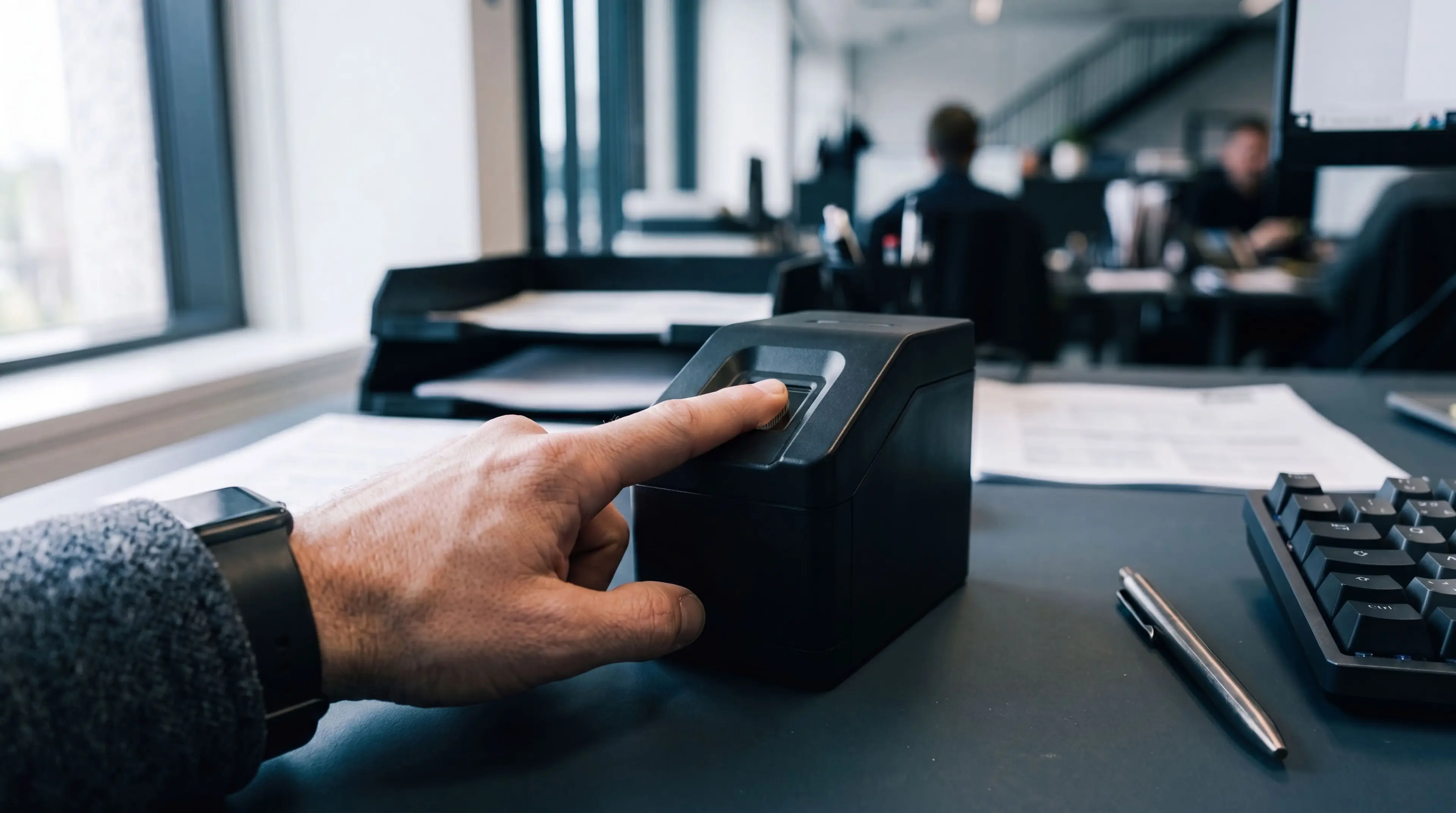
- Attend the appointment: A case officer will review your case as you submit documents. They will conduct a short interview, take your fingerprints, and charge the fee (typically 100–147 EUR in 2026, but it may vary.
- The waiting period: The processing time takes about 4 to 10 weeks. If your visa expires during this processing time, you will receive a Fiktionsbescheinigung – an interim certificate proving you are legally residing in Germany and preserving your right to work or study.
- Card collection: When approved, you will collect your physical electronic Residence Permit (eAT) – a pink-and-blue biometric plastic smart card containing an embedded chip and online identification features (eID).
‘We’re lowering barriers, stripping away bureaucracy and focusing much more on people’s potential. This has made the legal framework more modern than ever. At the same time we also want to make it easier for people to integrate into everyday life.’ – Hubertus Heil, former Federal Employment Minister.
Extensions, job changes, and travel rules
Failing to maintain your permit rules can lead to heavy fines, legal offences, or even deportation under immigration law.
- Renewals
Don’t leave this until the final weeks. You need to start the extension application process at least three months before your current card runs out. As long as you submit everything on time, your right to stay and work remains completely valid automatically while you wait for the Ausländerbehörde to sort out their decision.
- Changing or losing your job
If your visa is tied to your employer or you are on an EU Blue Card and things go wrong with your job, you have to tell the Ausländerbehörde about it yourself or through the employer. There is no need to panic, though – your visa doesn’t vanish overnight; they will usually give you 3 to 6 months to track down a new contract.
- Travel rights
Your stay authorisation lets you travel visa-free across the Schengen area for up to 90 days in any 180-day window. Just make sure you never leave your flat without both your plastic eAT card and your passport, as a digital photo on your phone will not cut it at a border check.
- The 6-month trap
If you leave Germany for more than 6 months straight, your standard temporary visa or permanent settlement permit will simply expire on its own, and getting back in becomes a massive headache unless you clear it with the office beforehand. If you hold an EU Blue Card, you get a lot more flexibility – the rules give you up to 12 months outside the country before your paperwork becomes invalid.
FAQ - German residence permit
How do I get a German residence permit?
You must first secure a German visa and enter the country (some countries are visa-exempt). Then, register your address, get a local health insurance and apply at a local Foreigners' Office (Ausländerbehörde) within 90 days of entering the country.
Can I work in the EU with a German permanent residence permit?
Yes, if you have an EU long-term residence permit. A common mistake is thinking that a permanent permit in Germany lets you move and work anywhere in Europe just because the borders are open. In reality, a standard German permanent permit only allows you to work in Germany. If you want the freedom to live and work in other European countries, you need to apply for a specific "EU long-term residence permit" instead.
What is the difference between a Standard Settlement Permit (Niederlassungserlaubnis) and an EU long-term residence permit?
A standard German permit locks your long-term living and working rights strictly to Germany, and it expires if you leave the country for more than 6 consecutive months. In contrast, the EU long-term permit allows you to easily move, live, and work in other EU member states, and it gives you more flexibility by allowing absences from the EU for up to 12 consecutive months.
Can I convert my Schengen visa to a work permit in Germany?
Generally, no. A Type D visa is required.
Does Germany need IELTS for a work permit?
No, but you may need to pass a German proficiency exam.