Essential apps to install in your first week in Germany

Before arriving in Germany, you need to know which tools will work when you're standing in front of a ticket machine or trying to get your food delivered on Sunday. We collected apps in Germany that save you time, money, and a lot of unnecessary frustration during those first few days.
Transportation apps: Navigate easily
Finance apps: Manage your money and support family back home
Housing apps: Secure a place to live in
Administrative apps: Protect your identity and stay informed
Food and grocery apps: Shop online
Transportation apps: Navigate easily
DB Navigator and city-specific apps like BVG or MVV provide the only reliable way to navigate in Germany. Physical maps or basic GPS miss the "real-time" reality, like sudden platform changes or delays.
- DB Navigator is the universal mobile app for anyone living in Germany. It covers everything from the high-speed trains (ICE) to the local S-Bahn. The app is essential for checking connections and buying tickets digitally, so you don't have to hunt for a machine.
- Local apps (BVG, MVV, HVV, VRS): Depending on whether you are in Berlin, Munich, Hamburg, Cologne or other cities, you need the local smartphone application. These are more precise for local bus schedules and often offer the best deals on short-trip tickets or 24-hour passes.
Finance apps: Manage your money and support family back home
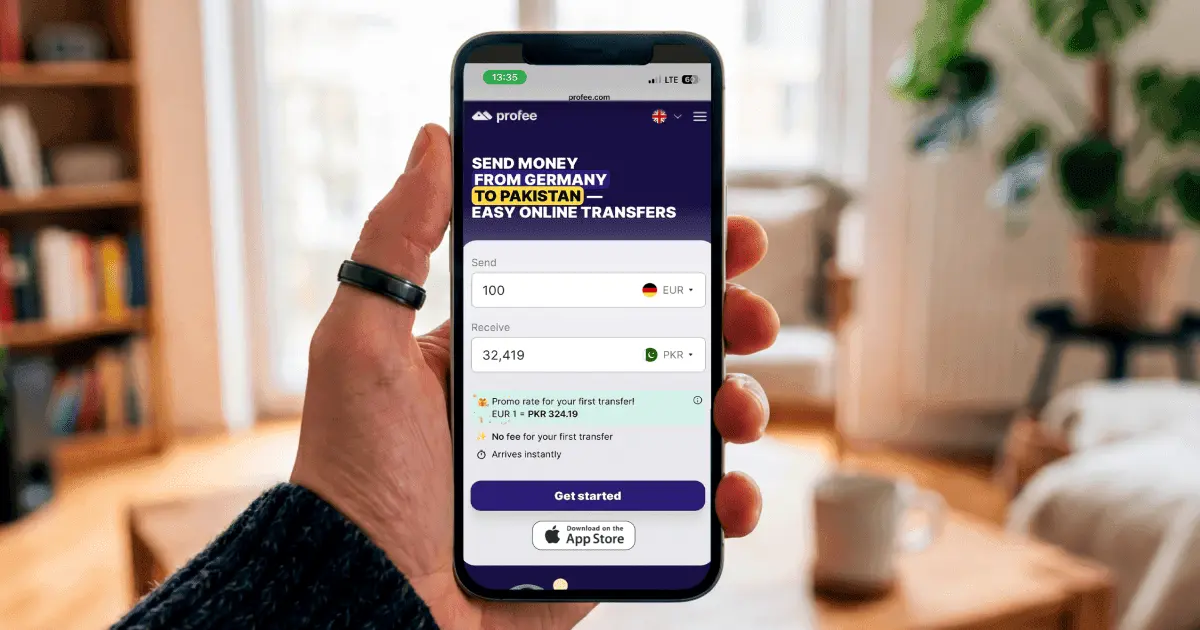
N26 and Profee are expat apps for setting up a local account and sending money to your home country.
- N26 is a banking app which allows you to open an account using your passport via a video call while still at your temporary accommodation. N26 gives you a functional IBAN immediately, which is a relocation essential for your phone contract and rent. Most traditional banks require a permanent address and a physical appointment, which you won't have in your first days, so N26 is a real alternative.
- Profee: Once you start earning or have settled your initial costs, you’ll likely need to send funds back home. Profee is a specialised digital payment service designed to send money from Germany to over 90 destinations worldwide. Profee turns your transfers into a stress-free routine, making it a useful smartphone application for keeping your family supported.
Housing apps: Secure a place to live in
WG-Gesucht is a housing search tool for finding a room in a shared apartment. Living in hostels as an expat won’t work because you can’t get your paperwork started without a permanent address. For example, you need a landlord's signature to complete your Bürgeramt address registration (Anmeldung).
Shared flats are popular among newcomers, as WGs are much more accessible than large housing companies. Yet you have to be fast – rooms are booked quickly.
Administrative apps: Protect your identity and stay informed
AusweisApp and NINA are the official tools you need to handle government identification and stay safe in your new city. The apps help you bridge the gap between being a visitor and becoming a registered resident.
- AusweisApp: As Germany moves its bureaucracy online, the official app allows you to use your digital identity to sign up for government services. AusweisApp is part of the eGovernment push, aimed at reducing the number of times you have to wait in line at a physical office.
- NINA: This is the federal emergency warning app. NINA is one of the most important apps in Germany for your personal safety, sending you direct alerts about everything from severe storms to local neighbourhood hazards.
Daily life apps: Book doctors and translate the fine print
Doctolib is a way to skip the phone tag when you need medical care. While DeepL and other language tools will help you to not get lost in a conversation. These apps in Germany make talking to locals easier.
- Doctolib: The app is a relocation essential for doctor appointment booking. You can see available slots in real-time and filter for English-speaking doctors. Doctorlib saves you from having to call clinics where the staff might only speak German.
- DeepL / Language tools: While you begin your language learning journey, you’ll face a constant stream of letters in your mailbox. A good translator is your best friend for making sense of contracts and official notices from the Bürgeramt.
Food and grocery apps: Shop online
Lieferando and Flink are the essential apps for when the supermarkets are closed, or you're too busy to cook.
- Lieferando: This is the go-to mobile app for restaurant delivery. Whether you need a pizza while unpacking or a healthy meal after a long day of paperwork, it’s a widely used service in the country. In Germany, almost all shops close on Sundays and late at night, so having a backup plan for food is a necessity.
- Flink: An "instant" grocery delivery app. They are a lifesaver during your first week when your fridge is empty, and you don't have time to find the nearest supermarket. Flink delivers essentials in minutes, which is perfect for late-night arrivals.

What apps do Germans use to meet people?
Bumble BFF and Meetup. While Bumble is great for one-on-one connections, Meetup helps you find hobby-based groups for hiking, tech, or language learning.
What app is mostly used in Germany?
WhatsApp and DB Navigator are the absolute standards for daily life. WhatsApp is the primary way everyone communicates, and DB Navigator is the mobile app for managing your commute and travel.
What social media apps do Germans use?
Instagram and TikTok for entertainment, LinkedIn for professional networking. You will also find that local Facebook groups are still quite active for finding neighbourhood news or furniture.
Can I get groceries delivered in Germany on Sundays?
Generally, no. For food on Sundays, your options are Lieferando for restaurant meals or visiting a "Späti" (German convenience store).
Do German grocery shops have apps?
Major chains like Lidl, REWE, and EDEKA all have apps for digital coupons and loyalty points. You can use them to catch weekly discounts that aren't available to regular shoppers.