Top 5 cities in Norway for expats in 2026

Norway is beautiful as a whole, but the best places for expats are Oslo, Bergen, Stavanger, Trondheim and Tromsø. Some cities are easier for career growth, while others suit families, students or people looking for a quieter life. This guide explains what living in each city can really feel like after an expat relocation.
How to choose the right city in Norway
Oslo: best for jobs and international life
Bergen: best for nature and local character
Stavanger: best for energy professionals and families
Trondheim: best for students, researchers and technology professionals
Tromsø: best for Arctic life and adventure
What expats often underestimate about Norway
FAQ about the best cities in Norway for expats
How to choose the right city in Norway
The right choice depends on your daily routine, work expectations, and the cost of living you can afford. Choose:
- Oslo for the largest job market and has an active expat community.
- Bergen for the sea, surrounding fjords and a quieter life compared to Oslo
- Stavanger for work in energy and a quiet, safe environment for your family.
- Trondheim for studying, researching or building a career in one of Norway's main tech hub cities.
- Tromsø for Arctic weather every day and a career in healthcare or tourism.
Be aware: You may need a visa and a residence permit to move to Norway. Check your country’s rules and our visa-related tips:
Oslo: best for jobs and international life
Oslo has the country’s largest job market, the biggest international community and more services for newcomers than any other Norwegian city.
The Oslo region has more than 1.2 million residents (as of 2026) and is Norway’s main centre for knowledge-based industries and services. The city is also home to people from many different backgrounds. While Norway had around 987,000 immigrants at the beginning of 2026 (equal to 17.5% of the population), most of them live in Oslo. The expat communities are diverse: you can meet Pakistanis, Brazilians, Uzbeks, Ukrainians and people from all around the world.
Why expats choose Oslo
Oslo gives newcomers more choice. You can find opportunities in:
- technology and IT;
- finance and consulting;
- healthcare;
- education;
- hospitality;
- shipping and maritime services;
- creative industries.
English is common in many international companies, so you’ll have time to learn Norwegian without feeling rushed.
If you come to Norway to work and support your family back home, you’ll need a reliable service. Try Profee – we send money to 90+ destinations safely and conveniently. 95% of our transfers arrive within minutes, so you’ll get things done quickly. All you need to start sending is to register on the website or app.
What daily life feels like
Oslo feels quiet and organised for a capital. Public transport makes it possible to live without a car, and forests, lakes and ski trails are easy to reach from the centre. You may work in a busy office and still spend the evening walking beside a lake. For many expats, this mix of career opportunities and nature is Oslo’s biggest attraction.
“It's never overcrowded, there's nature everywhere, you can even take the metro to go skiing after work! My favourite thing about Oslo was just how differently I spent my free time compared to Paris. In Oslo, in summer you can just go hiking, have a BBQ near a lake, have a swim, etc. without having to leave the city (kind of).” – Phobetor-7 on Reddit.
However, building social connections may take longer. Colleagues are usually friendly, but it’s hard to catch them outside of work. The best strategy is to meet the same people regularly – at language courses, the gym, volunteering events and so on. Be proactive and don’t wait for someone to invite you out.
As for the children, you can find several international schools to help them integrate.
Best for: professionals, international families and newcomers who want the widest range of opportunities.
Main challenge: paying high housing costs and trying not to feel disconnected in a diverse city.
Bergen: best for nature and local character
In 2026, Bergen is Norway’s second-largest city with around 300,000 inhabitants – 20% of whom have an immigrant background. Compared to Oslo, the city is smaller, but its job market is still strong.
Why expats choose Bergen
Bergen suits people who want to spend more time outdoors. Hiking routes begin close to residential areas, and you can go on a weekend trip into the mountains easily. The city can also be a good match for people working in:
- shipping;
- marine research;
- aquaculture;
- tourism;
- renewable energy;
- education;
- healthcare.
The city has enough international residents to help newcomers settle in and manage the expat relocation smoothly.
What daily life feels like
It rains constantly in Bergen, and there is no point pretending otherwise. The people who live here just buy a good jacket and go about their day.
“There will still be some rainy days, but you'll find yourself picking up the Norwegian attitude and trying to use every sunny day to fit in a hike (which you can always do even if you work since the sun sets so late!).” – backwardinduction on Reddit.
The social environment is noticeably quiet. If you are used to large community gatherings – like those common in Brazil, Pakistan, or Uzbekistan – daily interactions will feel extremely distant at first. Silence next to someone on a bus is not a sign they dislike you. Leaving people alone is simply how locals show respect.
The city is small enough that you will start to see the same faces often. You will notice the exact same people at your office, the gym, or on the trail. Showing up to these places regularly is how you actually start talking to them.
Best for: Nature lovers, maritime professionals, and anyone who prefers a smaller city.
Main challenge: Learning Nynorsk (a distinct written standard of Norwegian) and a social circle that takes a while to break into. Rent is cheaper here than in Oslo, but securing a decent apartment in a good neighbourhood is still a fight.
Stavanger: best for energy professionals and families
Stavanger has been shaped by Norway’s energy industry – international companies have brought engineers, managers, researchers and families to the area.
Why expats choose Stavanger
Stavanger offers strong career options in:
- oil and gas;
- offshore services;
- renewable energy;
- engineering;
- project management;
- technology;
- environmental services.
“On average salaries are good, especially in the energy sector, and also Stavanger and Norway is a good place to live. There are not many places where the standard of living is higher for most people. Of course if you’re filthy rich you can enjoy life anywhere, but for most people life here is good. ” – VikingenNor on Reddit.
You can easily get through the workday in English. However, learning Norwegian still matters, as it opens more jobs and makes daily life easier.
The city is also compact, generally quiet and surrounded by beaches, forests, mountains and fjords. You can reach most of these landscapes within about an hour by car.
What daily life feels like
Stavanger often feels like an international town rather than a large city. You may meet people from the expat community through an energy company, international schools, a sports club or another family.
Stavanger is calm. Evenings and weekends often centre on family, nature and planned activities. For some people, this feels safe and balanced. Others may miss busy streets, late-night shops and a larger cultural scene.
Best for: energy professionals, engineers and families looking for a quieter lifestyle.
Main challenge: fewer career options outside specialist industries.

Trondheim: best for students, researchers and technology professionals
Trondheim is Norway’s main university and technology city. It’s home to the Norwegian University of Science and Technology, better known as NTNU, and the research organisation SINTEF. NTNU has more than 43,507 registered students, and around 85% of them study in Trondheim in 2026. The large student population gives the city a younger and more international feel.
Apart from the students, Trondheim is also known as one of Norway’s leading tech hub cities.
Why expats choose Trondheim
Trondheim is attracting people working in:
- engineering;
- artificial intelligence;
- research;
- green technology;
- energy systems;
- education;
- startups;
- marine technology.
“Trondheim is a very comfortable place to live. And by the way, Norway is starving for engineers. Literally 90% of the students (in engineering) get a job before they graduate.” – noitapicnamE on Reddit.
International students and employees can join orientation programmes, professional events and social groups.
The city is also small enough to feel manageable. Many people walk, cycle or use buses, and nature is close to residential areas.
What daily life feels like
Trondheim feels young, practical and informal. If you move to a university or for research work, you will probably meet other newcomers quickly. Academic departments, orientation events and student organisations create ready-made social networks.
Networking here matters. A conversation at an event, conference or coworking space may later lead to a job or project.
Best for: students, researchers, engineers and technology professionals.
Main challenge: a specialised job market and a long winter. Student demand can also increase housing costs close to the university and city centre.
Tromsø: best for Arctic life and adventure
Tromsø is the largest city in northern Norway with almost 80,000 residents. People from 138 nationalities live there and represent around 16.4% of the population. Tromsø is much more international than you may expect from a remote Arctic city.
Why expats choose Tromsø
Expats choose Tromsø for work in:
- healthcare;
- tourism;
- Arctic research;
- marine science;
- education;
- hospitality;
- fisheries.
UiT, the Arctic University of Norway, brings in many international students and researchers. Their dedicated orientation programme will help you meet people and understand local life better.
The city draws people who genuinely want an outdoor life. Skiing, hiking, fishing, and seeing the northern lights are not rare holiday events here – they become normal midweek activities after your expat relocation.
What daily life feels like
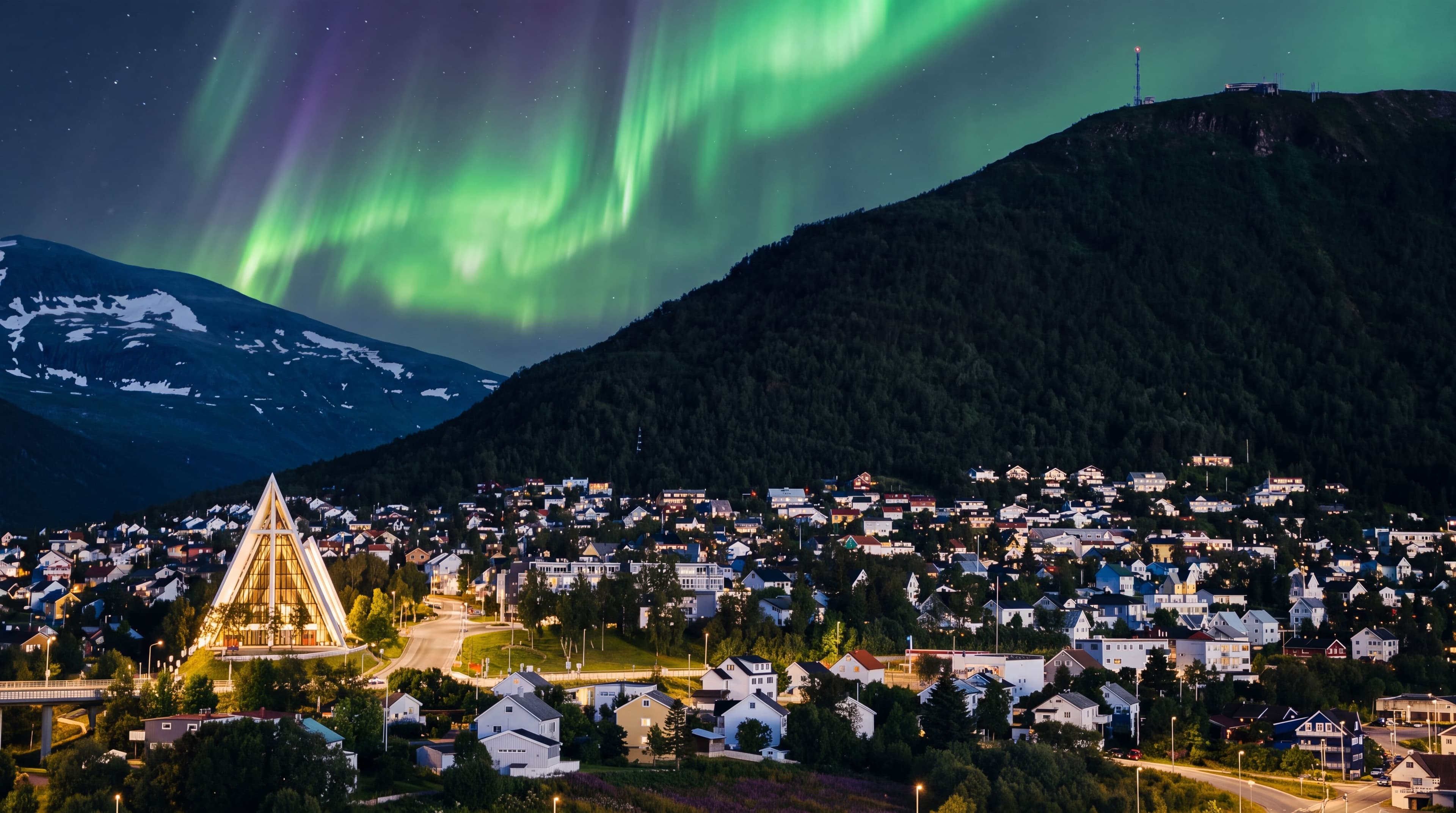
Living in Tromsø means living with very different seasons of complete darkness and light. The polar night normally lasts from the end of November until the middle of January. During this period, the sun stays below the horizon, although there are still a few hours of coloured twilight around midday.
In summer, the opposite happens: the sun doesn’t set. Your sleep quality, mood and energy can change. To adjust to local summers and winters, you should build a basic routine and good discipline: stay active, meet others regularly and go outside during the brightest part of the day.
The city itself is compact and social, so you may meet the same people often.
“There is a community for everything, no matter if you like climbing, swimming, boardgames, hiking, Magic the Gathering, Warhammer, singing, cooking… you will find your place!” – 7Xes on Reddit.
Best for: healthcare workers, researchers, tourism professionals and people who actively want to live in the Arctic.
Main challenge: the dark season, housing pressure and distance from family.
What expats often underestimate about Norway
Social life takes time
Don’t expect immediate dinner invitations, as the distance here will sting. However, don’t be mistaken, people in Norway aren’t cold and unwelcoming; they just need time to open up. Trust comes from shared routines. You have to show up at the same office or club every week, so people get used to you – and you to them – before they will be ready to have a deeper connection wiith you.
English is helpful, but Norwegian changes your life
You can easily survive your first few months using only English. However, stopping there keeps you on the outside. Learning the local language unlocks better job offers and real conversations. Using even basic phrases proves you are trying to settle in and respect local culture. Norwegians will appreciate your effort, even if you make mistakes.
Nature is part of everyday life
Going outdoors is a daily habit here, rather than an annual trip. If you want to socialise, expect to do it while walking, skiing, or visiting a remote cabin. You don’t need extreme gear or athletic skills. Just saying yes to a walk outside makes fitting in much simpler.
Everyone who lives in Norway must respect nature. Don’t throw trash on the streets or in the forests, be gentle with plants and keep a safe distance from wild animals.
Stability can feel quiet
People relocate here for safe streets, regular working hours, and systems that function well. The catch is that a perfectly running society is extremely silent. Shops shut early, spontaneous meetups rarely happen, and the evenings are distinctly calm. If you need rest, this is ideal. If you are used to noise, the silence hits hard.
FAQ about the best cities in Norway for expats
What is the safest city in Norway?
Trondheim, according to the Numbeo 2026 safety index.
Which jobs are in high demand in Norway?
Jobs in healthcare, IT, construction, and engineering.
What is a good salary in Norway?
The average monthly earnings equalled 62,070 NOK in 2025 – anything above that number is considered a good salary.
Which is the prettiest town in Norway?
Ålesund is often described as one of Norway’s most beautiful cities and has topped Dagbladet’s national online poll and Widerøe and Aftenposten Brand Studio poll.
Which is the coldest city in Norway?
Karasjok. In January 2026, the temperature there dropped to -41.5 degrees Celsius.